
Youth awareness of Loss & Damage during its fund operationalisation at COP28 and the role of media in informing and influencing
Media plays a central role in shaping public opinion and perception. The impact is even more evident for young activists, who often rely on digital platforms and social media for information and communication. Among the topics that have seen increased discussion during the last COPs, there is Loss & Damage (L&D).

What is Loss & Damage?
“Loss & Damage” refers to the harmful effects of climate change that continue despite efforts to reduce and adapt to it. While Mitigation focuses on cutting down greenhouse gas emissions, and Adaptation involves making changes to deal with climate impacts, L&D deals with the unavoidable and permanent effects of the climate crisis (referring to both economic and non-economic damages and losses).
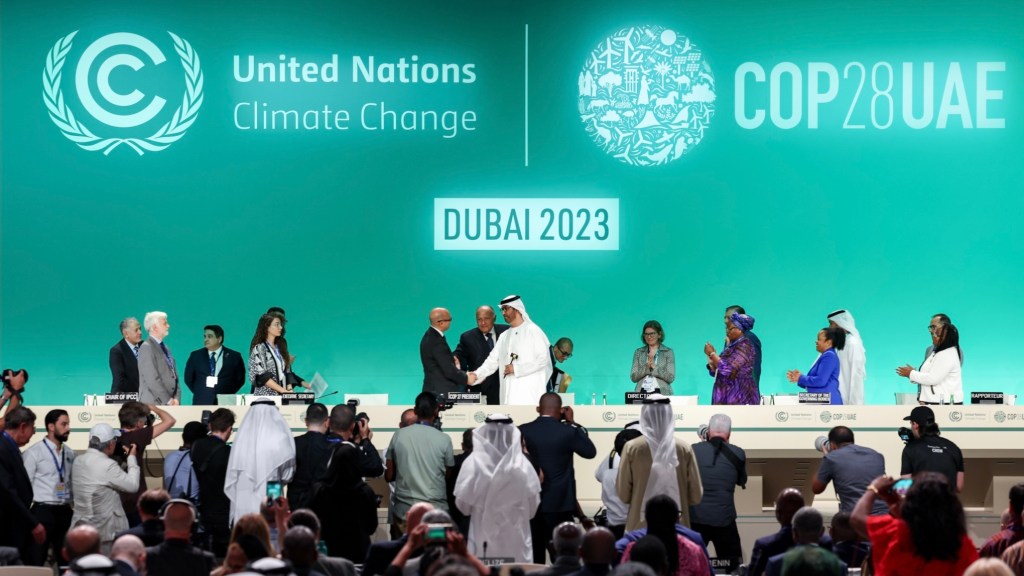
The discussion around L&D has recently started gaining attention, despite beginning in the early 1990s with the Alliance of Small Island States’ (AOSIS) proposal. Recognition grew over two decades, leading to COP27, which marked an essential moment with the historic agreement to create the L&D fund. A significant breakthrough was marked on the inaugural day of COP28 with the operationalization of the L&D fund, accompanied by a pledge of nearly 700 million dollars.
Youth level of awareness and the role of media
The news of the L&D fund operationalization quickly spread globally, reaching a high number of young activists. Indeed, at the Youth4Climate (Y4C) event, held less than two months before COP28, 39% of the youth participating who were interviewed were still unaware of the L&D, but by COP28 the number of young activists aware of it drastically decreased to only 8%, underlining a growth of the 31% in youth awareness.
Although the operationalisation of the L&D fund is considered a victory and a significant step forward, the majority (82%) of the young activists interviewed at COP28 remain dissatisfied with how policymakers have structured and implemented the fund. Critics in this manner have also been highlighted by media. Media emphasised the urgency and importance of the L&D fund, but while some of them highlighted its achievement during the conference focusing on a positive perspective, the majority underscored its weaknesses and areas of improvement.
In order to understand the possible media influence, it is critical to consider more specifically the differences in youth’s level of knowledge regarding the L&D at the Y4C event and lately at COP28. Based on interviews, the average number of those with a deep understanding of the topic remained constant, while those who increased a lot their awareness were the youth with a low and general level of knowledge, meaning those who could have been mostly influenced by the media coverage and the possible echo chambers created on the social media. A great difference among these two groups that has been noticed was the use of critical thinking in justifying and explaining each position. Among the first category, ideas were well-structured and explained, sometimes also supported by detailed data, while in the second group on the contrary thoughts were more summarised, superficial and were mainly reporting the mere media content. In general, youth with deep knowledge had a more academic background of information, which enabled them to have their own critical opinion and point of view, even when agreeing with what was reported by the media.
So, it is possible to suppose that the majority of youth taken into consideration were influenced by media coverage, shaping their awareness, knowledge, and opinions on the topic of the L&D. This highlights once again the significant influence that media possess and the substantial educational opportunities they can provide, particularly for complex and technical topics that sometimes may be perceived as distant and, consequently, of lower interest to civil society, such as the management of international funds.
How MEDIA CAN support higher levels of knowledge and interest AMONG YOUTH
L&D and climate finance are highly technical fields, therefore difficult to be easily accessible, understood and engaging. To maintain higher levels of interest and deepen understanding among youth (especially among those who are not specialised in these areas), first of all it is fundamental to ensure more consistent coverage over time. Indeed many youth underlined the fact that L&D discourses occur mainly during COP periods, with conversations fading outside these times. As a consequence, this temporal gap complicates staying updated and fostering awareness, particularly in regions where access to reliable information is limited. Online analyses also confirm spikes in L&D-related content only around COP events.
Secondly, media should offer more information and data in an accessible way. Given the technical complexity of the topic, when publishing it is essential to use a clear and easy language, making relevant examples near to youth. In addition, to offer a more comprehensive understanding, media should broaden their focus beyond the main topics commonly discussed. Currently when this is already done, in the majority of cases the final result remains quite complex and difficult to be completely understood, making the information flow less accessible.
Lastly, using diverse communication formats beyond written text can make the complex and sometimes “boring” information more engaging. Therefore, employing multimodal and multichannel strategies is crucial to appeal to different youth audiences and sustain their interest.
To conclude, if you are interested in staying updated about L&D, here is a list of LinkedIn pages discussing and publishing updates about it in English, ranging from general to technical/academic levels:
 Rethinking Climate
Leave a comment