
At COP28, youth voices still struggle to get involved in negotiations and decision-making processes.
Despite the still present debates about the actual effectiveness and usefulness of COPs, the opportunities these conferences offer are vital in addressing our current climate crisis. COPs serve not only as a gathering for world leaders and experts to discuss climate change, but also as platforms for giving visibility to local communities and youth who fight daily against its effects. At both negotiation tables and side events, young activists and young leaders are at the forefront of advocating for climate justice and a just transition. However, despite their passion and energy, many young participants report significant barriers to meaningful involvement in negotiations and decision-making processes.
The fact that the role of young activists is becoming increasingly central at COPs is evident as demonstrated by the introduction of the Youth and Future Generations Day and the Children and Youth Pavilion at COP27, which both recognize the importance of youth voices and real engagement, and the involvement of initiatives like the Youth Climate Champion role and the International Youth Climate Delegate Program. COP28 saw the highest youth participation ever joining both official delegations and advocacy groups. For sure, this is also the result of the fact that COP28 recorded the highest number of participants of all times.
As shown by the graph below, the number of observer organizations and observer states has more than doubled compared to COP27, and here is where the majority of youth are.

As reported by the first Youth Stocktake of UNFCCC Processes released by YOUNGO, which can be defined as a real milestone, despite youth participation having notably grown at COPs over the years, they have been mainly confined to being just observers.
So, while on the one hand, we have seen a great move forward to increase the number of opportunities that youth can gain by participating at the biggest conference regarding climate change, on the other hand, also according to youth, their involvement has still remained too superficial. Indeed, following The Youth Stocktake, by looking at the young delegates supported at COP, there is still a lack of homogeneity in the parties involving youth: the numbers are 1 to 20 youth involved per party, among which the best one is Tunisia (with 20 youth), but with the majority of parties involving fewer than 5 youth, primarily due to funding constraints.
Furthermore, it must be remembered that the youth attending COPs represent a privileged segment of those worldwide committed to fighting climate change. Therefore, one would expect these participants to be almost perfectly prepared and supported for the complex international and intergenerational discussions at COP. Unfortunately, this is often not the case.
One major barrier highlighted by youth at COP28 is the lack of accessibility and understanding of the negotiation process, which bring them to an “inside” and “outside” perception, linked to a feeling of participation or exclusion. The communication of decisions is often inadequate, leaving many youth confused about the outcomes and processes. This lack of clarity reinforces their feelings of being excluded and underappreciated. Youth also emphasized the limited educational opportunities and practical experiences that prevent them from being adequately prepared to effectively participate in COP negotiations.
“No one knows what’s exactly going on inside, like there’s a very big wall between what is going on inside and the public, so I feel like communication is not there.” – Youth from India at COP28
“You know, before we jump into these big climate events, we gotta make sure we’re all on the same page. It’s like we need some real, solid training first, not just winging it, ‘cause otherwise it’s like trying to play a game without knowing the rules. We wanna get everyone involved, but if we’re not all trained up, not everyone can really do their part, you know what I mean? So, let’s get some proper training going, then we can really make a difference at these global climate events.” – Youth from Tanzania at COP28
“I am graduating in Economics, this would be my Bachelor Degree, and even if I’m studying the economical and financial mechanisms, it is still very difficult for me to debate about them. I think that I lack of practice in this area, so I always feel myself insecure when I have to speak in front of a public and give my own point of view regarding a problem and its possible solutions.” – Youth from Italy at COP28
“When drafting texts during negotiations, if maybe there are specific text drafts with the human rights principle all spelled out, you can just copy-paste it, but if you have to write everything from the beginning, usually youth have serious problems in doing it. So, I think technical knowledge is a gap, and it is limiting youth to make a proper impact. Because the points raised by the youth in the negotiations were great. You know, their speeches were great, the delivery was great, but then the follow-up documents weren’t on a very high level, and then they weren’t taken into account, and even the lead negotiator for Ireland was saying that. Policymakers were like ‘Look, we need something more specific’.” – Youth from Germany at COP28
In addition, the intergenerational gap exacerbates these issues, especially the knowledge, experience and language gap. Indeed young participants often struggle with the technical language used by policymakers, making it hard to fully engage in discussions and to understand critical documents. The disparity in comprehension adds another layer of difficulty for young delegates striving to meaningfully contribute to COP outcomes.
“Yesterday I participated with my team, in which we are all very young, to a negotiation panel as observers and I realized that if I would have had the chance to actively participate in it, I would have had difficulties. Not related to my preparation in my topic, but more related to how to communicate. When I listen to policymakers, they use a language that is really difficult for me both to understand and interpret, and to use in my speeches.” – Youth from Chile at COP28
“There is an evident lack of intergenerational knowledge among us and policymakers, which should be managed: adults should share more their knowledge with us to create a direct connection and make us arrive at their level of understanding so that we could be more included in the negotiations.” – Youth from Zimbabwe at COP28
As a result, many young activists feel marginalized and used for youth-washing and reputational scopes without actually being considered part of the negotiations and of the decision-making processes. Among the young leaders interviewed at the Youth4Climate event, 66% of them expressed feeling excluded by decision-making processes, with an additional 34% reporting a sense of only minimal inclusion, while none affirmed of feeling fully integrated into negotiations and decision-making processes by adults.
“We are just used to make great speeches, but then we are not considered as peers when it is actually time to make decisions, we are excluded, especially on the highest steps of the decision-making process.” – Youth from UK at COP28
“Youth are not included in the negotiations, and not even in the definition of the plans to be implemented. We have been excluded from the mitigation and adaptation plans, we will be excluded from the one of the Loss & Damage as well.” – Youth from Belgium at COP28
Moreover, restrictions imposed by host countries further complicate advocacy efforts. For instance, at COP28, held in the UAE, activists faced limitations in expressing their views freely. Indeed they had access only to a small designated area.
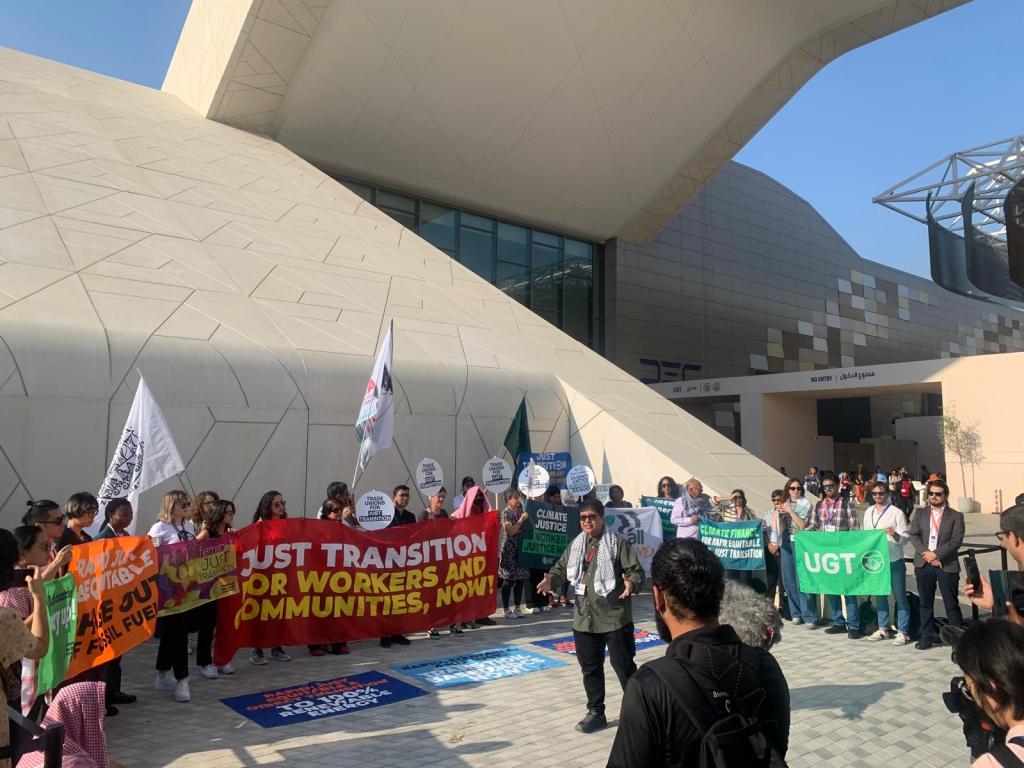
“Last year, there was a lot of buzz about how activists might get treated. But let’s be real, when we say it’s ‘safe,’ it’s not really safe. It might look all shiny and okay, but there’s no freedom to speak your mind, express your true self, or even talk about your sexuality, especially in places like UAE, Egypt, or Azerbaijan. In more democratic countries, sure, there might be more space for demonstrations, but it’s still a struggle.” – Youth from France at COP28“These COPs have been tough for us climate activists to even get something going. There are so many restrictions, especially in places like Egypt and the UAE where the COPs are hosted. It’s like they’re keeping a tight leash on us.” – Youth from Kenya at COP28
“When you’re in a country where human rights violations are rampant, you can’t exactly feel safe as a human rights activist, right? Especially in places like Egypt and the UAE. And it’s crazy, right? Next year, for the third time straight, we’re going to a place where civil society hardly gets a voice.” – Youth from Germany at COP28
Despite these difficulties, some youth affirmed feeling more engaged compared to previous years in side events, workshops, and conferences held outside the formal negotiation spaces. This confirms the positive impact of the increasing initiatives, such as those mentioned at the beginning of the article, to support youth at COPs. For instance, in the Youth Pavilion many workshops, events, games and presentations were taking place, highly increasing the opportunities for networking, internships and possible participation in educational programs all around the world to support young activists.
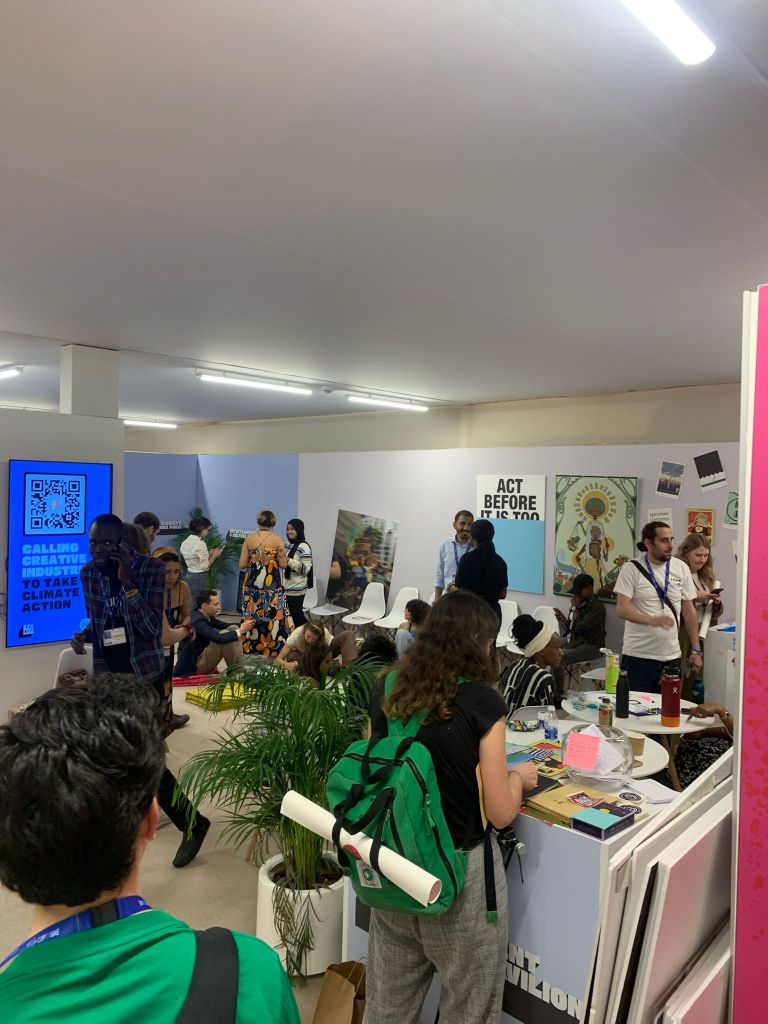
While the increased visibility and participation of youth at COP28 mark significant progress, these developments are overshadowed by persistent barriers that hinder genuine youth involvement in decision-making processes. The feedback from young participants highlights a stark reality: they are often relegated to the role of spectators rather than being active contributors in negotiations. This exclusion, compounded by a lack of training and accessibility, underscores a still superficial engagement rather than a substantive one. To truly harness the potential of youth and ensure their contributions are valued, COPs must move beyond symbolic gestures and address the structural issues that prevent full and effective youth participation. Only then the promise of intergenerational equity and comprehensive climate action can be realized.
This article can be found in Italian on Osservatorio Parigi’s website. Rethinking Climate is pleased to be partnered with Osservatorio Parigi. Discover their aim and objective here.

 Rethinking Climate
Leave a comment